What Ordinary Days Do to Your Health
Published 31-08-2026
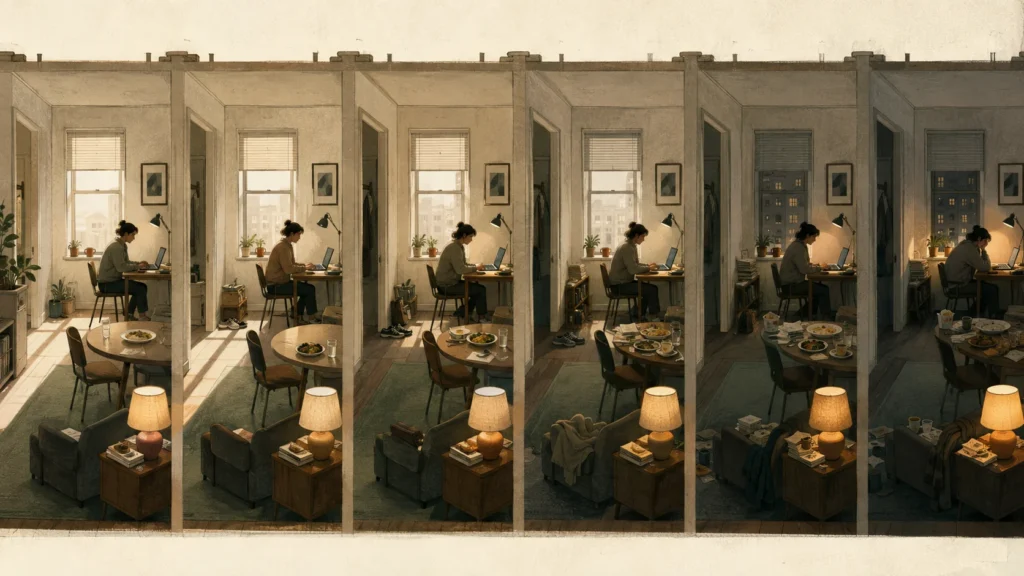
The changes are small enough that neither of us can give them a date.
His blood pressure is higher than it used to be, his glucose has drifted in the wrong direction, and the waist of his trousers tells much the same story. He still walks, he tells me, although the long evening walk that used to happen almost without thought now belongs mostly to weekends.
The stairs have changed too. He can still climb them, but he notices them.
I ask what changed.
He looks away for a moment, as if searching the previous few years for an event large enough to explain what we are seeing.
“Nothing, really.”
The answer stays with me because he means it.
There was no heart attack, operation, serious infection, or injury that reorganized his life. Nothing happened that would have earned a prominent date in his medical record.
Life simply rearranged itself.
His work became more sedentary. Dinner moved later as the working day stretched. The evening walk became easier to postpone. Sleep shortened a little, not enough to feel like a sleep problem, but enough that mornings became heavier. Weekends gradually became less a part of the week than a place to recover from it.
None of these changes looked important when they arrived.
That was partly the problem.
Medicine is trained to recognize the event.
The body also responds to what becomes ordinary.
Nothing happened. That is not the same as nothing changed.
Medicine likes dates for good reason. They help us locate the beginning of pain, the diagnosis, the operation, the scan that changed, the laboratory result that crossed a threshold.
Much of physiology is less cooperative.
Blood pressure can rise without a memorable beginning. Muscle can slowly become less capable because less has been asked of it. Sleep can lose some of its regularity one late evening at a time. Metabolic health may change long before the person feels ill enough to name what is happening.
There may be no single moment when the change becomes a story.
The body does not require one.
It is an adaptive organism. Muscle responds to use. Cardiovascular capacity responds to demand. Metabolism responds to what arrives, when it arrives, and what the body is being asked to do around it. Recovery influences what can be repeated the next day.
None of this means that yesterday determines tomorrow.
One poor night’s sleep is not chronic sleep deprivation. A celebration is not a metabolic disease. Missing several walks does not suddenly erase strength.
That matters because health advice often gives ordinary choices more moral weight than biological science does.
One day is rarely destiny.
The more interesting question is what happens when a version of that day becomes familiar enough that the body repeatedly has to adapt to it.
Sleep, food, and movement do not wait their turn
We separate health into categories because doing so helps us study it.
Sleep has its literature. Nutrition has another. Physical activity has another still.
Life mixes them together.
Someone who sleeps poorly may wake with less energy to move and a different appetite than usual. A physically active day can change the night that follows. Illness can alter sleep, activity, and eating at the same time. Each behavior may have its own biology, but the person carrying them has only one body.
A 2026 prospective analysis of 53,242 UK Biobank participants examined sleep, moderate-to-vigorous physical activity, and nutrition together in relation to major cardiovascular events. Over approximately eight years of follow-up, 2,034 participants experienced a major cardiovascular event.1
The researchers did not discover a special formula in which three healthy behaviors magically amplified one another. In fact, they did not find convincing evidence of statistical synergy among them.
That result is useful.
The point is not that sleep, movement, and food merge into one biological intervention. It is that people live them together even when research and health advice often discuss them separately. The authors themselves describe important relationships among these behaviors.1
This feels much closer to what I see in practice.
The patient in front of me does not have an exercise problem on Monday and a sleep problem on Tuesday. Several parts of his day have gradually leaned in the same direction. None is dramatic enough to explain everything alone.
Together, they describe the life his body has been living.
That changes the question.
Instead of searching immediately for the one habit to blame, we can begin looking at the pattern that has become normal.
Change can accumulate without announcing itself
I use the word lifestyle cautiously.
It can make life sound more freely chosen than it often is.
A person working nights does not have the same control over sleep timing as someone with a predictable daytime schedule. Pain can change movement before motivation ever enters the conversation. Illness itself may reduce activity, alter appetite, disturb sleep, or make recovery harder. Work, income, disability, family responsibility, medication, age, and environment all shape what can realistically happen in a day.
Sometimes the behavior we observe is partly the consequence of disease rather than its cause.
That is especially important when we interpret observational research.
If people who move less later develop more disease, we cannot assume that every part of the relationship runs in one direction. Early disease may already be changing movement. Poor health can disturb sleep. Depression can alter appetite and activity. Genetics, biology, chance, and exposures that have nothing to do with personal discipline remain part of every health story.
A diagnosis is not evidence that someone lived badly.
I have cared for people who followed nearly every recommendation medicine could reasonably give and still developed serious disease. I have also known people whose bodies remained remarkably forgiving despite risks I would never advise another person to take.
Biology deals in probabilities, not moral verdicts.
Daily patterns still matter. They can influence risk, reserve, metabolic health, strength, and what becomes easier or harder for the body to do later.
But influence is not authorship.
That distinction lets us take ordinary behavior seriously without pretending that every illness is a personal biography written in food, steps, and sleep.
Small changes can move a larger pattern
Health culture has always liked thresholds.
They are easy to remember and easy to print.
The difficulty begins when a useful target quietly turns into a border between success and failure.
The 2026 cardiovascular study offers a good example. The investigators modelled relatively modest differences in sleep, moderate-to-vigorous physical activity, and diet quality. A combined difference of approximately 11 additional minutes of sleep, 4.5 additional minutes of moderate-to-vigorous activity, and three points on their diet-quality score was associated with roughly 10 percent lower risk of a major cardiovascular event.1
Those numbers are memorable enough to become tomorrow’s health headline.
They should not become tomorrow’s prescription.
The researchers did not take one group of people, add eleven minutes to their sleep, prescribe five more minutes of exercise, improve their diet score, and then demonstrate ten percent fewer cardiovascular events. This was observational modelling. The authors explicitly caution against interpreting the estimates as intervention targets, and the study has the familiar limitations of observational research, including residual confounding, possible reverse causation, differences in how the behaviors were measured, and limited generalizability from the UK Biobank population.1
The result interests me for another reason.
Meaningful differences in risk were not confined to lives that had been transformed beyond recognition.
Movement research points in the same direction. A 2025 Lancet Public Health systematic review included 57 studies from 35 cohorts, with 31 studies entering meta-analyses. Compared with about 2,000 steps per day, 7,000 steps was associated with substantially lower risks across several health outcomes, including a 47 percent lower relative risk of all-cause mortality. Benefits for some outcomes continued beyond 7,000 steps.2
Seven thousand should not now replace ten thousand as another number people feel guilty for missing.
The body can respond before a life looks transformed.
I have not always handled this part of medicine as well as I would like.
Earlier in my career, when weight, blood pressure, or glucose moved in the wrong direction, I could reach too quickly for the familiar correction: move more, eat differently, lose weight. The advice might have been medically defensible. But there were consultations when I listened to the number more carefully than I listened to the year that had produced it.
Patients often arrived carrying the judgment before I said anything.
They knew they had stopped exercising. They knew their weight had changed. They knew which foods they had been told to avoid. Some spoke about themselves with the language of misconduct. They had been “good,” then “bad,” then had somehow “failed.”
That vocabulary deserves our attention.
A systematic review covering 242 studies found consistent associations between experienced, anticipated, and internalized weight stigma and disordered eating thoughts and behaviors.3 Another systematic review found that weight stigma, particularly internalized stigma and everyday discrimination, was associated with lower physical activity in many of the studies examined, although much of the evidence was observational and the findings were not uniform.4
Shame is not just something people feel while receiving health advice. It may also become part of the difficulty in acting on it.
I still believe deeply in responsibility. Blood pressure does not improve because we have become kinder to ourselves, and muscle does not become stronger through good intentions.
But I no longer think humiliation is a useful delivery system for responsibility.
There is a clinical difference between helping someone see what can change and asking them to defend why change did not happen sooner.
The first can open a future.
The second often keeps the consultation facing backward.
Recovery belongs inside the day
We tend to notice activity because activity looks productive.
Recovery is quieter, so it can be mistaken for the space left over after everything important has been done.
Biology treats it differently.
Sleep is the clearest example. For years, public discussion often reduced sleep health to a number of hours. Duration matters, but the American Heart Association’s 2025 scientific statement describes a broader picture that includes continuity, timing, regularity, daytime functioning, architecture, and sleep disorders.5
A good night is not simply a long night.
Pattern matters.
In a prospective study of 72,269 UK Biobank participants, people with the most irregular sleep patterns had a 26 percent higher relative risk of major cardiovascular events than those in the most regular category during approximately eight years of follow-up. Adequate sleep duration did not fully remove that association among the most irregular sleepers.6
Again, this was observational evidence. It does not prove that irregular sleep caused those events.
Nor should anyone with an unpredictable week now become anxious because bedtime moved.
There are periods of life when regularity is simply difficult. Illness, work, travel, new parenthood, grief, and other demands do not negotiate with a sleep schedule.
The broader point is that recovery also acquires shape through repetition.
A demanding day followed by adequate restoration is biologically different from a life in which demand repeatedly expands into the space where restoration used to occur.
For years, I thought of recovery mainly in the setting where surgeons most obviously encounter it: what comes after an operation or an illness.
I now think the word belongs much earlier.
Recovery is part of what allows ordinary physiological systems to meet another day without every demand becoming more expensive than the last.
Sometimes that means sleep. Sometimes it means not filling every available hour. Sometimes what protects a healthy pattern is not another behavior added to the day, but something that finally stops occupying it.
What deserves to become ordinary?
I return to the man who told me that nothing had changed.
By the end of our conversation, I understood his answer differently.
He did not need me to discover that exercise was good for him or that sleep and food mattered. He had heard those messages before.
What he had not seen clearly was the direction in which his ordinary day had moved.
There was no single villain to remove. The change had happened gradually enough that each adjustment seemed reasonable at the time.
That is how many patterns take hold.
We did not design an ideal life in the consultation room.
Instead, we looked for the parts of his existing day that might move without asking him to become someone else. The evening walk did not have to return every night to matter. Dinner did not need to become a nutritional project. Sleep did not need another score.
The question was smaller, and I think more serious:
What could become different often enough to matter?
This is where Daily Foundations meets Medicine’s Blind Spot.
Medicine can know a great deal about movement, nutrition, sleep, strength, and recovery while still underestimating what it takes for any of them to become part of an actual life.
The wider problem is feasibility. A recommendation has to land somewhere, inside work schedules, bodies, homes, relationships, resources, and circumstances that differ enormously from one person to another.
Daily Foundations adds another layer.
Once something does fit, repetition begins to matter.
Not perfection or optimization, and not a performance that has to be repeated flawlessly every morning for the rest of one’s life.
A direction that survives ordinary life is more useful than an ideal routine that survives only while motivation is unusually high.
There will still be late dinners and missed walks. There will be weeks when sleep behaves badly. There will be holidays, illness, fatigue, grief, deadlines, and evenings when pleasure is more important than optimization.
That is not failure.
That is the life in which health has to exist.
The patient’s previous years did not need a verdict. They needed to become visible as a pattern.
Once he could see that, the conversation changed.
We were no longer asking why he had failed to live correctly.
We were asking what he wanted his ordinary days to begin making easier again.
Most ordinary days never enter the medical record.
They still enter the body.
References
1. Koemel NA, Biswas RK, Simpson SJ, et al. Combined variations in sleep, physical activity, and nutrition and the risk of major adverse cardiovascular events. European Journal of Preventive Cardiology. Published March 23, 2026. doi:10.1093/eurjpc/zwag141.
2. Ding D, Nguyen B, Nau T, et al. Daily steps and health outcomes in adults: a systematic review and dose-response meta-analysis. The Lancet Public Health. 2025;10(8):e668-e681. doi:10.1016/S2468-2667(25)00164-1.
3. Levinson JA, Kinkel-Ram S, Myers B, Hunger JM. A systematic review of weight stigma and disordered eating cognitions and behaviors. Body Image. 2024;48:101678. doi:10.1016/j.bodyim.2023.101678.
4. Pearl RL, Wadden TA, Jakicic JM. Is weight stigma associated with physical activity? A systematic review. Obesity. 2021;29(12):1994-2012. doi:10.1002/oby.23274.
5. St-Onge MP, Aggarwal B, Fernandez-Mendoza J, et al. Multidimensional Sleep Health: Definitions and Implications for Cardiometabolic Health: A Scientific Statement From the American Heart Association. Circulation: Cardiovascular Quality and Outcomes. 2025;18(5):e000139. doi:10.1161/HCQ.0000000000000139.
6. Chaput JP, Biswas RK, Ahmadi M, et al. Sleep regularity and major adverse cardiovascular events: a device-based prospective study in 72 269 UK adults. Journal of Epidemiology and Community Health. 2025;79(4):257-264. doi:10.1136/jech-2024-222795.
Author’s note: The opening scene is a composite drawn from recurring clinical situations. It does not represent a single identifiable patient.
About the author
Mustafa Kemal Calik, MD, is a cardiovascular surgeon and digital health consultant. He writes about the space between medical capability and ordinary life; how care, technology, relationships, and daily conditions shape what happens after the clinical decision is made.