Medicine’s Blind Spot: Where Medical Success Meets Ordinary Life
Published 25-08-2026
Modern medicine can diagnose more, treat more, measure more, and rescue more than any generation before us. Yet medical capability and human capacity are not the same thing. Between them lies a part of health we still do not see clearly enough.
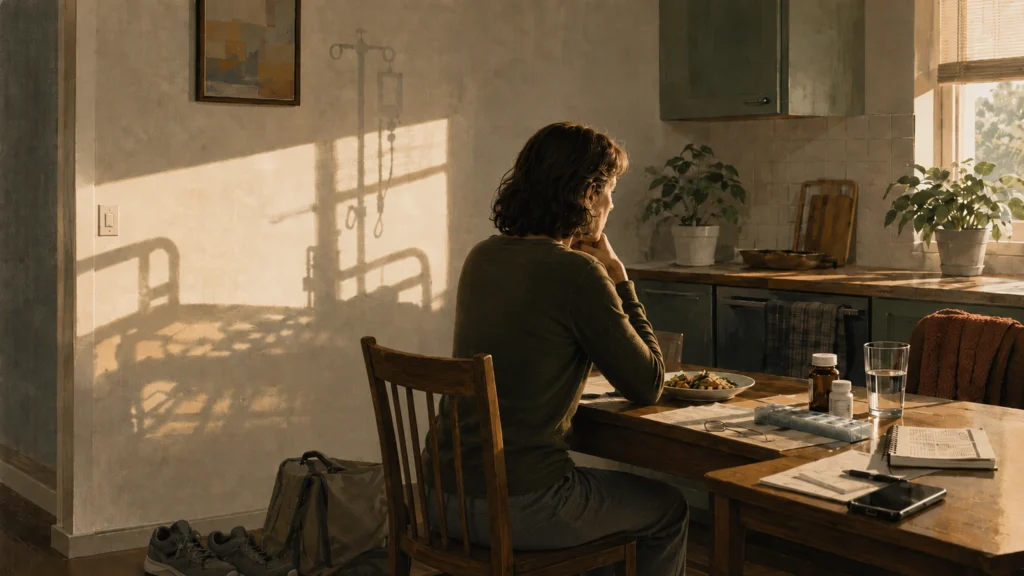
In an operating room, almost everything that matters has someone responsible for it.
Someone watches the blood pressure. Someone is responsible for the airway. During cardiac surgery, the perfusionist monitors circulation outside the body, while the scrub nurse knows where every instrument is. The surgeon knows which structure is being held, divided, repaired, or bypassed. Responsibility remains visible because ambiguity can become dangerous within seconds.
The operation ends, and responsibility becomes harder to see.
A few days later, the same patient may be sitting at a kitchen table with new medications beside old ones, a wound that looks different from yesterday, instructions to walk, appointments to arrange, and a family wondering which change matters enough to call about.
Nothing dramatic may be happening.
That is partly why this stage is easier to miss.
Cardiovascular surgery trained me to recognize the dangerous moment. Tissue becomes threatened. Circulation fails. Bleeding begins. A narrowing window demands a decision. In those moments medicine knows what it is for, and so does the surgeon.
It took me longer to understand how much of health is decided in quieter hours, after the team has dispersed and before the next appointment begins. No monitor announces that a family is becoming overwhelmed. No alarm sounds when a treatment plan has grown larger than the day available to carry it.
That quieter territory is where I have come to see Medicine’s Blind Spot.
What is Medicine’s Blind Spot?
Medicine’s Blind Spot is the gap between medical capability and lived capacity: between what medicine can diagnose, measure, treat, or prescribe and what a person, family, community, and care system can actually carry through ordinary life.
I am not using “blind spot” as another name for medical error.
Some blind spots have widened because medicine succeeded.
We now rescue people from illnesses that once killed quickly, detect disease earlier, and keep people alive for years with conditions that previous generations might not have survived long enough to accumulate. In 2023, 51.4% of U.S. adults, about 131 million people, reported living with at least two of 12 chronic conditions examined by the CDC. Among adults aged 65 and older, the proportion was 78.8%.1
Survival has changed the work of medicine. It has also changed the work required of the person who survives.
Someone may live for years with coronary disease, diabetes, arthritis, kidney disease, lung disease, cancer, or several of them together. Each condition can generate medically reasonable treatment. Yet all of those treatments must enter the same body, the same household, and the same twenty-four-hour day.
That difference now sits near the center of how I think about health.
Medicine quite properly asks whether an intervention is indicated, whether it works, whether the benefits justify the risks, and whether it has been performed correctly. But one more question belongs beside those:
What will this medical plan ask of this particular life?
That is not softer medicine.
It is what happens when evidence leaves the page and enters the day.
The work of being a patient
Researchers studying treatment burden gave formal language to something patients and clinicians had long encountered.
In 2009, Carl May, Victor Montori, and Frances Mair argued for “minimally disruptive medicine”: care that takes account not only of disease but also of the work treatment requires from people living with chronic illness.2 Nathan Shippee and colleagues later described patient complexity through the relationship between workload and capacity. Workload includes treatment, self-care, illness, employment, family obligations, and the demands of ordinary life. Capacity includes the time, energy, physical ability, cognition, finances, literacy, and social resources available to meet those demands.3
On paper, the distinction looks simple.
Medicine can separate illness into diagnoses. The patient has to carry all of it in the same body and the same day.
A medication may be entirely appropriate. So may the dietary change, rehabilitation program, glucose monitoring, blood-pressure checks, specialist appointments, wound care, and exercise prescription. But medical correctness does not lengthen Tuesday. It does not improve eyesight, repair an arthritic knee, restore a tired spouse, create transportation, or give an exhausted patient another reserve of attention.
When the total work becomes unmanageable, the failure usually becomes visible later. A medication is missed. Rehabilitation stops. An appointment is lost. A symptom is reported too late.
The chart may eventually acquire a familiar word: nonadherence.
Sometimes that word describes the problem accurately.
Sometimes it describes the final event and misses the story that produced it.
I have become more interested in what happened before the missed tablet. How much work had accumulated? What else was competing for the patient’s attention? Which part of the plan was easy for us to prescribe because somebody else would have to perform it?
That changes the clinical question.
We are no longer asking only whether the treatment is good.
We are asking whether the treatment and the life can coexist.
When one patient’s care becomes several people’s work
Medical records require a named patient.
Care often involves people whose names appear nowhere on the prescription.
I have watched spouses learn wound care without ever thinking of themselves as caregivers. Adult children become medication historians, drivers, translators of medical language, appointment coordinators, and the people who notice that their father is eating less before anyone has documented weight loss.
Much of this work disappears precisely when it is done well.
The medicines arrive on time, so nobody asks who reordered them. The appointment is kept, so the rearranged working day remains invisible. Deterioration is noticed early, so the health system receives a useful telephone call without seeing the anxious night that preceded it.
The better a family becomes at carrying the work, the easier it is for the system to forget that someone is carrying it.
The scale is enormous. Caregiving in the U.S. 2025, from AARP and the National Alliance for Caregiving, estimated that 63 million American adults, nearly one in four, had provided ongoing care for an adult or child with a complex medical condition or disability during the previous year.4
The answer is not simply to ask families to do more.
Once a medical plan depends on another person, that dependency becomes part of the plan’s safety. A relative’s presence tells us little about readiness. Love may provide willingness, but it does not provide training, time, physical strength, financial flexibility, or inexhaustible endurance.
I have therefore become cautious when I hear, “The family will manage.”
Perhaps they will.
Families perform extraordinary work every day.
But family support should not become an invisible reserve that medicine assumes will refill itself.
Discharge can close a hospital episode while leaving most of the work created by that episode still ahead.
Every behavioral prescription has a geography
When I prescribe walking now, I try to picture the street.
Is there a pavement? A hill? Somewhere to sit? Can an older person cross before the traffic signal changes? Is there summer heat, winter ice, fear of falling, or simply nowhere nearby worth walking to?
The same is true when we recommend better food, rehabilitation, social connection, or regular follow-up. Advice always lands somewhere.
The World Health Organization’s 2025 report on social determinants of health equity again documented the powerful influence of income, education, housing, employment, disability, social conditions, and access to power and resources on health.5 Healthy People 2030 similarly recognizes transportation, food access, neighborhood conditions, economic stability, health-care access, and social context as determinants of health and functioning.6
At the population level, these are large public health concepts.
At the bedside, they become very ordinary.
A walking prescription needs somewhere safe enough to walk. Dietary advice depends on food that can be obtained, afforded, prepared, and repeated. Rehabilitation requires a way of reaching rehabilitation. Remaining socially connected becomes a different task after a spouse dies, hearing worsens, buses disappear, or every outing begins with stairs.
This does not make individual behavior unimportant.
It makes behavior more real.
One of medicine’s easier mistakes is to prescribe an action as though the ability to perform it came bundled with the recommendation. When it does not happen, explanation can drift toward motivation: the person should exercise more, should eat better, should attend, should comply.
Sometimes that is fair.
Sometimes we have prescribed across a gap we never looked at.
A physician cannot redesign a neighborhood during a consultation. We cannot repair poverty before treating hypertension. But inability to solve a barrier does not make it clinically irrelevant.
I now find it more useful to ask whether the surroundings reduce the effort required for a healthy action or add friction to it every day.
That friction may be money, distance, time, fear, stairs, traffic, heat, digital difficulty, or dependence on another person’s schedule.
Seen this way, environment is not an excuse for poor health.
It is part of the mechanism by which health becomes easier or harder to sustain.
When medicine can detect more than it can absorb
My skepticism about digital health is not nostalgia.
I have worked in digital health because I believe good technology can widen what medicine is able to see and sometimes allow us to intervene earlier. Remote monitoring can detect change between visits. Wearables can reveal patterns that would otherwise remain invisible. Artificial intelligence can examine quantities of information that no clinician could review unaided.
A 2024 systematic review examining remote patient monitoring during transitions from hospital to home included 29 studies from 16 countries. The authors found generally positive effects on patient safety and adherence and improvements in some functional outcomes, while evidence for several other clinical and quality-of-life outcomes remained mixed.7
The evidence is promising, but it leaves a harder question unresolved: what happens after a device detects a change?
A sensor can record a pulse without knowing that the patient has stopped eating. A dashboard can register fewer steps but cannot know whether the reason is breathlessness, grief, extreme heat, a broken lift, fear of falling, or simply nowhere meaningful to go.
The more we measure, the more consequential interpretation becomes.
Remote cardiac monitoring makes the problem particularly visible. In a study of 26,713 people with implanted cardiac devices, researchers recorded 205,804 remote transmissions during one year. More than 82,000 were alerts.8
Those numbers do not argue against monitoring.
They reveal the work created by monitoring.
Every clinically meaningful signal enters a chain of responsibility. Someone must receive it, distinguish urgency from noise, understand enough context to interpret it, decide whether action is required, and make sure the action reaches the patient.
A 2025 scoping review examining responsibility across AI, telemonitoring, wearables, and mobile health found persistent ambiguity in how responsibility is defined and redistributed when digital technologies enter care.9
That ambiguity is not confined to ethics seminars.
It appears in ordinary workflow.
Who believed someone else was watching? Who thought the abnormal value had already been reviewed? Who knew the patient had also developed a new symptom? Who was expected to act when the software had done exactly what it was designed to do?
A monitor can extend observation without extending responsibility.
The clinically important distance in digital health is not simply the distance between patient and hospital. It is the distance between a detected change and an owned response.
When that distance is clear, technology can strengthen care.
When it is not, we may have built a better way to see a problem without building a better way to hold it.
When good care loses continuity
Specialization is one of modern medicine’s great achievements.
Complex disease requires depth. I want difficult vascular disease treated by people who know vascular disease deeply, rhythm disorders assessed by electrophysiologists, and complicated cancers managed by teams who understand those cancers in detail.
But every division of expertise creates a boundary.
A patient may pass through primary care, cardiology, endocrinology, radiology, hospital medicine, rehabilitation, pharmacy, and home. Each professional may understand one part extremely well.
The patient, however, continues to inhabit all of them at once.
This is why continuity deserves more respect than its administrative sound suggests.
A 2018 systematic review examined 22 observational studies from nine countries. Eighteen, 81.8%, reported a statistically significant association between greater continuity of doctor care and lower mortality, although differences among the studies prevented meta-analysis and the observational design does not establish causality.10
Continuity is also associated in the literature with greater satisfaction, adherence, and lower hospital use.10
But its value is easier to understand in human terms.
Continuity preserves meaning across time.
It means knowing not only that a medication changed but why. It means knowing that the ankle swelling appeared after something else changed, that the daughter who usually helps is away, that a patient who normally calls early has gone quiet, or that an otherwise reassuring blood-pressure value now belongs to someone who has stopped eating.
The record can contain every fact and still lose the thread.
This is why I resist imagining health care as a sequence of technically correct encounters. Technical excellence remains non-negotiable. I have spent my professional life depending on it.
But a patient should not have to reconstruct the meaning of those encounters each time medicine changes hands.
The seams matter too.
What Medicine’s Blind Spot does not mean
I would distrust this idea if it became another fashionable way of criticizing doctors, hospitals, technology, or scientific medicine.
That is not its purpose.
The blind spot partly exists because medicine has become powerful enough to create problems of continuity that earlier generations seldom had the opportunity to face.
We can reopen coronary arteries, replace valves, suppress dangerous immune responses, monitor hearts from another city, detect disease before symptoms appear, and increasingly turn once-fatal illnesses into chronic conditions.
I would not exchange that progress for an imagined simpler past.
But every capability creates consequences outside the moment in which it is delivered. Somebody must remember the medication, interpret the symptom, reach the appointment, afford the food, use the device, rebuild strength, and recognize when the original plan no longer fits.
Medicine does not have to solve every part of that life.
It does have to see it.
That is the boundary I would draw.
Seeing a barrier does not mean claiming that a cardiologist must become a transport planner, that a surgeon must cure loneliness, or that every consultation must solve inequality. It means refusing to confuse the portion of reality visible to our clinical tools with the whole reality in which the treatment must work.
A laboratory result can be reassuring while the plan around it is becoming impossible. A device can function perfectly while ownership of its alert remains vague. A family can appear composed while the work quietly exceeds what they can continue to carry.
None of this makes expertise less important. It changes the frame in which we decide whether expertise has succeeded.
From the hospital room to the kitchen table
There are nights when minutes matter.
I know that medicine well.
There are operations where precision becomes mercy, when the right movement at the right moment changes whether another human being leaves the room alive.
But dramatic medicine can distort our sense of scale because most of a life is not lived there.
Health is also being decided while someone sorts tablets at breakfast, waits for a bus to rehabilitation, tries to sleep beside a sick spouse, decides whether worsening breathlessness can wait until morning, or sits with a telephone wondering which doctor should receive the call.
The hospital sees only a fraction of those hours.
Yet prevention has to fit there. Recovery has to fit there. Caregiving, eating, moving, sleeping, remembering, paying, deciding, and asking for help all have to fit there.
Our responsibility cannot follow every patient through every hour. Our consequences already do.
For many years I thought of the hospital and ordinary life as separate settings joined by discharge.
I no longer do.
A medical decision changes what happens later at the kitchen table. A diagnosis reorganizes a family conversation. A new device changes who may be expected to watch. A recommendation can create work in a household that the clinician who made it will never see.
That realization changed how I began looking at medicine.
Four Paths Through Medicine’s Blind Spot
StayOnHealth approaches this question from four directions. They are not four compartments of health advice. They are places where the gap between medical capability and lived capacity repeatedly becomes visible.
People examines the relationships through which health is carried: patients, families, caregivers, clinicians, friends, and communities.
Daily Foundations examines movement, food, sleep, strength, recovery, and other routines not as moral achievements but as biological practices that must fit real lives.
Tools & Decisions asks what technology, monitoring, screening, AI, and risk prediction actually add once measurement has to become judgment.
Follow-Through examines what happens across time: medications, appointments, transitions, rehabilitation, communication, warning signs, and the thread connecting one clinical encounter to the next.
They all return to the same question:
What has to be true in an ordinary life for good medicine to become better health?
My answers to that question will change.
They should.
Medicine will change. Technology will change. Families, cities, work, and the diseases we survive will change. New capabilities will solve old problems and expose new ones.
But I suspect the question itself will become more important.
The further medicine pushes what is biologically possible, the more attention we will need to pay to what is humanly sustainable.
That does not require making medicine less technical.
It requires making our definition of success wide enough to include what happens to the person after the technical work is done.
A treatment that cannot be sustained is not the same achievement as one that can. Detection without an owned response is not continuity. Clinical stability does not tell us everything about the stability of the life a patient is returning to.
Those distinctions are where Medicine’s Blind Spot becomes clinically useful rather than merely rhetorical.
I still believe deeply in rescue.
I have seen what an operation, a graft, a timely diagnosis, a carefully chosen drug, and an experienced team can do. Medicine should keep becoming better at all of them.
But technical success answers only the question medicine was designed to ask at that moment.
Life asks the next one.
Medicine has become extraordinarily good at seeing disease.
We must become equally serious about seeing the life that has to live with what medicine sees.
A note on the phrase “Medicine’s Blind Spot”
I do not claim the phrase itself as original.
The exact title Medicine’s Blind Spot appeared in Family Medicine in 1999 in an article by Claudia S. Miller and in Mayo Clinic Proceedings in 2022 in an essay by Charlotte A. Hayes.11,12 The phrase and close variants have also been used elsewhere to describe other neglected areas of medicine.
My use of the term on StayOnHealth is different and deliberately defined:
Medicine’s Blind Spot is the gap between medical capability and lived capacity; the recurring space between what medicine can diagnose, measure, treat, or prescribe and what people, families, communities, and care systems can actually carry through ordinary life.
The research cited here establishes the individual phenomena that inform this view: multimorbidity, treatment burden, patient capacity, informal caregiving, social determinants of health, continuity of care, remote-monitoring workload, and shifting responsibility in digital medicine.
Medicine’s Blind Spot is my way of making sense of what becomes visible when these separate strands of evidence are brought together.
References
1. Watson KB, Wiltz JL, Nhim K, Kaufmann RB, Thomas CW, Greenlund KJ. Trends in Multiple Chronic Conditions Among US Adults, By Life Stage, Behavioral Risk Factor Surveillance System, 2013–2023. Preventing Chronic Disease. 2025;22:240539. doi:10.5888/pcd22.240539.
2. May C, Montori VM, Mair FS. We need minimally disruptive medicine. BMJ. 2009;339:b2803. doi:10.1136/bmj.b2803.
3. Shippee ND, Shah ND, May CR, Mair FS, Montori VM. Cumulative complexity: a functional, patient-centered model of patient complexity can improve research and practice. Journal of Clinical Epidemiology. 2012;65(10):1041–1051. doi:10.1016/j.jclinepi.2012.05.005.
4. AARP and National Alliance for Caregiving. Caregiving in the U.S. 2025. Washington, DC: AARP; 2025. doi:10.26419/ppi.00373.001.
5. World Health Organization. World Report on Social Determinants of Health Equity. Geneva: World Health Organization; 2025. ISBN 978-92-4-010758-8.
6. U.S. Department of Health and Human Services, Office of Disease Prevention and Health Promotion. Social Determinants of Health. Healthy People 2030. Accessed August 25, 2026.
7. Tan SY, Sumner J, Wang Y, Yip AW. A systematic review of the impacts of remote patient monitoring interventions on safety, adherence, quality-of-life and cost-related outcomes. npj Digital Medicine. 2024;7:192. doi:10.1038/s41746-024-01182-w.
8. O’Shea CJ, Middeldorp ME, Hendriks JM, et al. Remote Monitoring Alert Burden: An Analysis of Transmission in >26,000 Patients. JACC: Clinical Electrophysiology. 2021;7(2):226–234. doi:10.1016/j.jacep.2020.08.029.
9. Meier E, Rigter T, Schijven MP, van den Hoven M, Bak MAR. The impact of digital health technologies on moral responsibility: a scoping review. Medicine, Health Care and Philosophy. 2025;28(1):17–31. doi:10.1007/s11019-024-10238-3.
10. Pereira Gray DJ, Sidaway-Lee K, White E, Thorne A, Evans PH. Continuity of care with doctors—a matter of life and death? A systematic review of continuity of care and mortality. BMJ Open. 2018;8:e021161. doi:10.1136/bmjopen-2017-021161.
11. Miller CS. Medicine’s blind spot. Family Medicine. 1999;31(4):280–282. PMID: 10212771.
12. Hayes CA. Medicine’s Blind Spot. Mayo Clinic Proceedings. 2022;97(9):1602–1604. doi:10.1016/j.mayocp.2021.12.020.
About the author
Mustafa Kemal Calik, MD, is a cardiovascular surgeon and digital health consultant. He writes about the space between medical capability and ordinary life; how care, technology, relationships, and daily conditions shape what happens after the clinical decision is made.