
The Feed Has No Natural Ending

What short video scrolling may reveal about self-control and the disappearing pause?
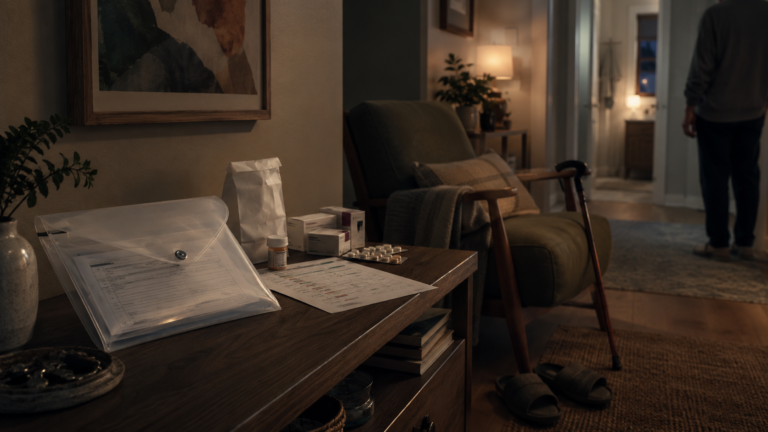
Most forms of media used to contain their own stopping points.
A chapter ended. A newspaper column ran out of page. A television program reached its credits. Even when we wanted more, there was usually a brief interval between one thing and the next.
That interval mattered more than I used to think.
It was the moment when continuing became a choice.
Short video scrolling changes that small piece of architecture by making continuation almost automatic.
Short video feeds have changed that small piece of architecture. One clip ends and another begins almost immediately. We do not necessarily decide to continue. Continuation is already happening. Stopping requires us to interrupt it.
That difference is easy to dismiss as a feature of interface design. I am not sure it is so trivial.
A 2026 study in NeuroImage examined what happens in the brain while young adults watched short videos they preferred. Fifty-six participants underwent functional MRI, combined with proton magnetic resonance spectroscopy. During preferred videos that participants chose to watch to completion, activity decreased in two regions involved in cognitive control, the dorsal anterior cingulate cortex and the dorsolateral prefrontal cortex. Resting glutamate levels in the dACC were also related to the degree of suppression seen during viewing. 1
The obvious headline would be tempting.
Short videos switch off self-control.
That is not what the study showed.
It did not demonstrate brain damage, addiction, or lasting cognitive decline. It measured a particular neural state during viewing in a relatively small group of young adults. The findings are interesting precisely because they are narrower than the claims that social media often attracts.
They made me wonder about something simpler.
Perhaps the important question is not what short videos are doing to the brain in isolation, but what kind of decision environment we are building around the brain.
Where does short video scrolling remove the stopping point?
We usually speak about self-control as a quality of the individual.
Someone should use the phone less. Stop scrolling. Set a timer. Be more disciplined.
There is some truth in that. Personal habits matter.
But behavior is never produced by willpower alone. We understand this easily in other parts of health. The way a street is designed affects how people drive. The location of stairs changes how often they are used. Food placement influences what gets chosen. We do not conclude from this that people have no agency. We simply accept that environments make some actions easier than others.
Digital environments do the same.
The difference between a book and an infinite feed is not that one requires self-control and the other does not. It is that the book repeatedly gives the reader a natural place to reconsider.
At the end of a chapter, I have to begin another one.
In an endless feed, I may have to decide actively to stop something that has already continued without me.
That reverses the burden.
A recent experiment presented at CHI 2026 tested what happened when researchers deliberately added friction to TikTok, including changes to autoplay and scrolling. Some compulsive patterns of use decreased, but participants also liked the altered experience less, and the effects on perceived agency were not uniformly positive. 2
An earlier study found something similarly revealing. When users had to act upon receiving the next post, they remembered more of what they had seen, but many disliked the added friction. 3
That reaction makes sense.
Friction is annoying.
It is also sometimes where intention reappears.
Not every inconvenience is a defect
Technology has spent years removing unnecessary steps from daily life, often for good reasons. Few of us want more cumbersome banking, slower communication, or websites that ask us to confirm every minor action.
But not every pause is wasted time.
Some pauses are decision points.
That distinction deserves more attention.
The feed does not force us to continue watching. Nor does the current evidence justify blaming short videos for every problem associated with attention or self-control. But platforms can influence how frequently a person encounters a natural opportunity to stop.
That may matter most because the design is almost invisible.
We notice an annoying pop-up immediately. We rarely notice the absence of a pause.
As a physician, I have learned to be interested in things that disappear quietly from a system before anyone thinks to measure them. Functional reserve is one example. A patient can look well at rest yet have little capacity left for the next physiological demand.
The comparison is imperfect, but I find myself thinking about decision-making in a similar way. We ask people to regulate themselves inside environments that may require repeated acts of interruption simply to stop doing what the interface has made effortless.
Then we describe difficulty stopping mainly as a failure of discipline.
That seems incomplete.
This is another version of Medicine’s Blind Spot: the environment changes, but responsibility is still assigned almost entirely to the individual.
The better question is not whether responsibility belongs to the person or the platform. It belongs to both, but in different ways.
People remain responsible for how they use technology.
Designers remain responsible for the environments in which those choices are made.
Public health has spent decades learning that behavior emerges from the meeting between the two.
There is no good reason for digital life to be treated differently.
Perhaps the most interesting part of the new NeuroImage study is not that particular brain regions became less active during preferred short-video viewing. Those findings will need replication, extension, and longer-term research.
What interests me more is the context in which they occurred.
The participants were not being forced to watch. They were choosing content they liked, inside a format built around rapid continuation.
That is ordinary life now.
The scientific question is therefore larger than whether short videos are good or bad for us. It is whether self-control changes when the environment quietly changes the point at which self-control has to be exercised.
For much of our media history, stopping points arrived whether we wanted them or not.
Today, many of them have been designed away.
The feed has no natural ending.
Perhaps we should pay more attention to what disappeared with it.
References
- Hong T, Su C, Zhou H, Geng F, Hu Y. Brain activity inhibition during Short Video Viewing: neurochemical insights. NeuroImage. 2026;327:121722. doi:10.1016/j.neuroimage.2026.121722.
- Alin JA, Eck T, Suoranta S. Effects of Adding Friction to Attention-Capture Patterns in TikTok. Proceedings of the 2026 CHI Conference on Human Factors in Computing Systems. 2026.
- Ruiz N, Molina León G, Heuer H. Design Frictions on Social Media: Balancing Reduced Mindless Scrolling and User Satisfaction. Proceedings of Mensch und Computer 2024. 2024.